Recliner Types: Wall Hugger, Zero Gravity, Power and Manual

Quick answer: The main types of recliners are the standard rocker or glider recliner, the wall hugger (also called wall-away), which slides forward as it reclines and needs only a few inches from the wall, the push-back recliner, which looks like an ordinary chair, the zero gravity recliner, which raises your knees as you lean back, and the power lift recliner, which tilts forward to help you stand. Any of them can be manual or power.
Mark Hollister has wanted a recliner for years. Linda has resisted for just as long. Her objection was never comfort; it was looks. In her mind, a recliner meant a bulky overstuffed chair that took over the room, and their newly refreshed Scottsdale great room didn't have a spot for one.
That's the picture most people have. Recliners have a reputation for being big, puffy and impossible to hide.
Here's the detail that changes the decision. Many recliners today look like a regular club chair or tailored sofa until you lean back, and some need only a few inches from the wall to recline fully.
“Many recliners today look like a regular club chair until you lean back.”
What Are the Different Types of Recliners?
Which one fits your room and how you sit? Here are the main types.
| Type | How it works | Space behind it | Best for |
|---|---|---|---|
| Rocker recliner | Rocks upright, reclines with a lever or button | About 12 in or more | Relaxing, nurseries, reading |
| Glider recliner | Glides on a track instead of rocking | About 12 in or more | Smooth motion, nurseries |
| Wall hugger (wall-away) | Seat slides forward as the back reclines | About 4 to 6 in | Tight spaces, against a wall |
| Push-back | Lean back to recline; no visible handle | Varies, often 8 to 12 in | A tailored look |
| Zero gravity | Reclines with knees raised and weight distributed | Varies by model | Deep relaxation |
| Power lift | Tilts forward and up to help you stand | Varies by model | Anyone who finds standing difficult |
| High-leg recliner | Traditional chair on legs with a hidden mechanism | Varies | Formal rooms |
These are typical ranges. Always check the manufacturer's clearance for the exact model.
What Is a Wall Hugger Recliner?
How does it recline so close to the wall? A wall hugger's seat moves forward on its base as the back reclines, so the back never swings into the wall. That's why it can sit just a few inches out.
What Is a Zero Gravity Recliner?
What makes it different? A zero gravity recliner tilts the whole seat back so your knees rise as you recline, spreading your weight across the chair rather than concentrating it at your lower back. Many power sofas and sectionals now offer zero gravity seats, such as the Hooker Furniture Lyra zero gravity power sofa.
Power Vs Manual Recliners: Which Is Better?
Which should you choose? It depends on how you'll use it.
- Manual recliners use a lever, handle or your own push. They need no outlet and have fewer parts to wear.
- Power recliners use a button and a motor, stop at any position and often add power headrests and lumbar support. They need an outlet nearby or a battery pack.
- Power lift recliners add a lift motor that tilts the whole chair forward to help you stand.
Our guide to power recliners and power sofas covers which power features matter most.
“A wall hugger's seat slides forward as the back reclines, so it never swings into the wall.”
How Much Space Does a Recliner Need?
How far from the wall should it sit? This is where Mark's plan came together.
The Hollisters' Corner
The only open spot in the great room was in front of the window, where the chair could sit 8 inches from the wall before blocking the walkway to the patio. The rocker recliner Mark first liked needed at least 12 inches behind it to recline fully. A wall hugger needed about 4 to 6.
“The spot gave them 8 inches. The rocker recliner needed 12. A wall hugger needed about 4 to 6.”
Space in Front
What about the footrest? Most recliners need roughly 2 feet or more in front for the footrest to extend, so keep the coffee table and walkways clear of it. See our small living room layout guide for clearances.
What the Hollisters Chose
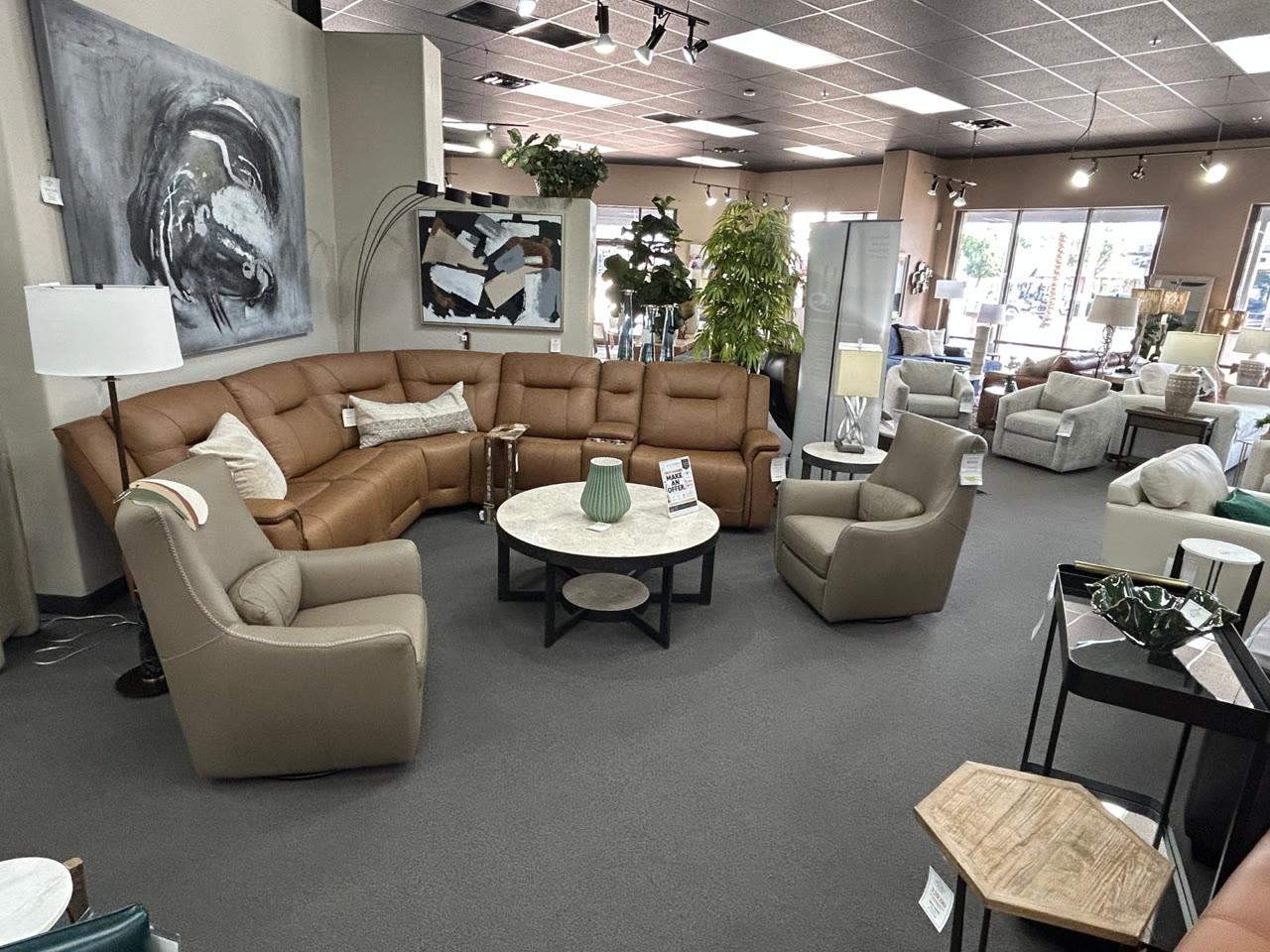
Linda and Mark sat in a dozen recliners at our Scottsdale showroom, and Linda kept forgetting which ones reclined. They chose a power wall hugger in a tailored leather that looks like a club chair, with a power headrest for Mark. It sits 6 inches from the wall in front of the window and reclines without touching it. Linda admits she sits in it more than she expected.
Try Every Kind of Recliner
A recliner should be tested sitting the way you actually relax. Browse our reclining furniture, living room chairs and leather, with recliners from makers such as Flexsteel, Bradington Young, Palliser and Hooker Furniture. For reclining sectionals, read how to choose a reclining sectional configuration, and for other seating, see types of sofas.
Visit our Scottsdale showroom at 14202 N. Scottsdale Rd., Suite 112, or call (480) 483-3600.
Filed Under
Frequently Asked Questions
What Is a Wall Hugger Recliner?
A recliner whose seat slides forward as the back reclines, so it can sit just a few inches from the wall.
What Is a Zero Gravity Recliner?
A recliner that tilts the whole seat back so your knees rise as you recline, spreading your weight across the chair.
Is a Power or Manual Recliner Better?
Power recliners stop at any position and add features like power headrests. Manual recliners need no outlet and have fewer parts. Choose based on how you'll use it.
How Much Space Do You Need Behind a Recliner?
About 12 inches or more for a standard recliner, and about 4 to 6 inches for a wall hugger. Check the exact model's specifications.